
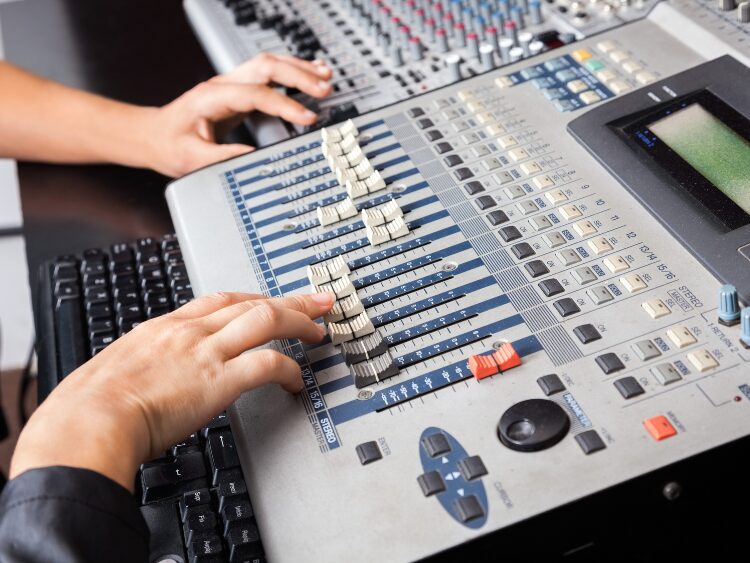
Alright, here’s the thing with mixers—people always think the more channels the better, right? Because it sounds fancy and like you have more control. But honestly, when you’re staring down a mixer with tons of knobs and sliders, it can get overwhelming fast. And not every channel gets used. Like, you might buy a big board and then half the channels just sit there collecting dust. Been there, done that.
If you’re a solo artist, podcaster, or running a small gig, you don’t always need the biggest, baddest mixer out there. I know the temptation’s real—“hey, let’s get the biggest board I can afford!” But trust me, lugging around a huge mixer that you barely use is a pain. Plus, it’s more expensive than you really need.
But on the flip side, getting too few channels can be annoying too. I mean, what’s worse than wishing you had “just one more input” when you’re mid-show? So, before you buy anything, it makes total sense to figure out just how many channels you really need.
What’s This “Channel” Thing Anyway?
Think of channels as inputs. Plug in a mic—that’s one channel. A guitar? Another channel. Maybe a keyboard or your laptop’s audio? That’s also a channel, usually. Each channel usually lets you tweak volume, tone, and pan. Some mixers even have effects built-in, which is a nice bonus.
Mixers come in all sorts of shapes and sizes. You’ve got tiny ones with 4 channels for simple stuff. Then there are mid-size ones with 8, 12, or 16 channels which work for small bands or studios. The really big boards—think 24, 32 channels or more—that’s for big shows or pro studios.
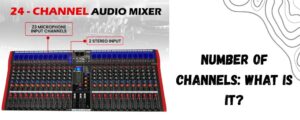
Main takeaway: don’t just buy bigger because bigger sounds cooler. Get something that fits what you actually need.
Breaking it Down by Use Case
Solo Musician or Podcaster?
If you’re just singing and playing an acoustic guitar, or if you’re podcasting with one mic and maybe some background music, 4 to 6 channels will probably be enough. You’ll even have some room for a guest or a second instrument. Nice and simple.
Small Band or Duo?
In the case of a duo or small trio -vocals, guitar, perhaps keys and percussion, 8 to 12 channels can be used. That provides you with effects and stereo mixing.
Full Band?
It adds up to the channel count quickly when you have drums, bass, guitars, vocals, and keyboards. Individually, drums occupy 4 to 8 channels, depending on the number of mics. Then add in the remaining instruments, and you will be into the 16-channel territory. The mixers of 16 to 24 channels are mostly used in most rehearsal rooms or small venues.
Clubs and Studios?
They are used with 24 to 32 channels in a small club night or personal studio. It can fit a complete band, DI boxes, backing tracks, and more than a few extra microphones. Professional studios, or touring rigs, are left to larger boards.
One More Thing: Digital vs Analog Mixers
Digital mixers sometimes let you add “virtual channels” via USB or other digital connections, which is super handy if you want to grow your setup over time. Analog mixers don’t have that luxury—you only get the physical inputs on the board.
So, digital is great if you think you might need more inputs in the future, while analog keeps things simpler and sometimes less expensive.
The Aux Sends and Buses You Forget About
Channels are important, but so are aux sends and buses. These let you send different mixes to different places—like the drummer’s monitor, in-ear systems, or a recording device.
If your mixer only has a couple of aux sends, you might get stuck with monitoring very quickly. So when counting your channels, also check how many aux sends and subgroups you get.
Sometimes those are more useful than a couple of extra channels you may never plug anything into.
Quick Cheat Sheet: How Many Channels Do You Need
- 4 to 6: Solo performers, podcasters, streamers
- 8 to 12: Small bands, duos, trios
- 16 to 24: Full bands, rehearsal spaces, small venues
- 24 to 32+: Studios, clubs, bigger live shows
A Few Mixers to Check Out
- 5 Core MX Series: Affordable and tough, great for small performers or podcasters.
- Behringer Xenyx: A favorite for small to medium setups, it even has built-in effects.
- Yamaha MG Series: Trusted by venues and studios, clean sound and lots of routing options.
Each line offers different channel counts, so you can pick what fits you and grow from there.
Final Thoughts
At the end of the day, go with a mixer that fits what you own right now, maybe with a little wiggle room. Don’t buy into the “just in case” mindset where you pick something huge that’s way more than you’ll ever need. That just means more weight, more cost, and time wasted wrestling with unused knobs.
Keep it real, and enjoy making music instead of fiddling with empty channels!
Here you can find amazing drum thrones; alternatively, browse our product page to find the best keyboard bench, audio mixers, drum mics, piano bench, keyboard stand, speakers, party speakers, and more.