
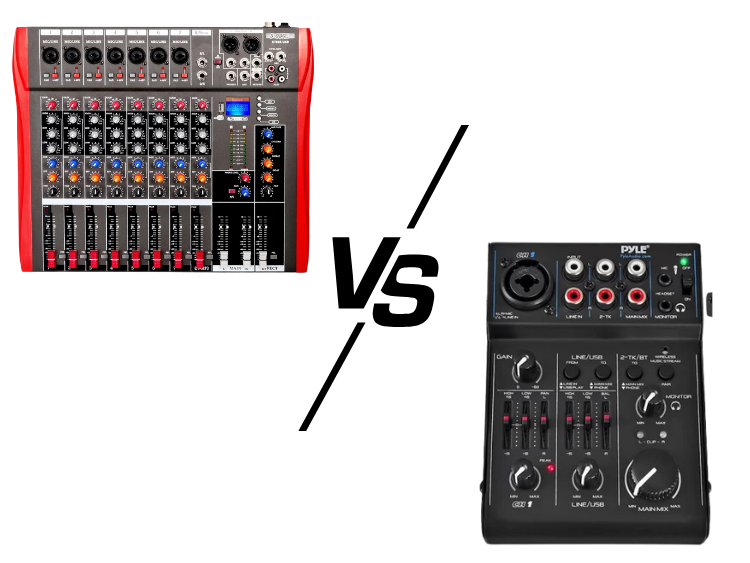
USB mixers connect straight to your computer or recording rig. The advantage is clear: you get uninterrupted, direct audio—no lag, no random dropouts, just crisp digital sound locked in. Whether you’re tracking a song, live-streaming, or DJing with software, USB is the safe, solid bet for pro setups.
Bluetooth mixers ditch the cable. Streaming a playlist from your phone? Need to move around or avoid cable clutter in a pop-up gig? Bluetooth is a lifesaver. But there’s a flip side: a crowded room or interference can bring little delays or dropouts, and for tight studio work, you might miss the precision that wired offers.
As explained by the audio technology site RF Wireless World, a USB connection offers a hardwired solution with a significantly higher data transfer rate and lower latency than Bluetooth. This makes USB connectivity essential for real-time applications like multitrack recording, professional live streaming, and music production, where even a slight delay (latency) between input and output is unacceptable for the performer or engineer.
Conversely, Bluetooth is praised for its wireless convenience and low power consumption, making it ideal for casual applications like streaming backing tracks or music during breaks, but its higher latency and susceptibility to wireless interference disqualify it for mission-critical mixing tasks
USB Mixers vs Bluetooth Mixers: The Real Difference
This is the part most people care about—what actually changes once you’re behind the console.
1) How They Connect
- USB: You run a cable to your computer. Simple, stable.
- Bluetooth: Your device pairs wirelessly. No cable, less fuss.
2) Audio Quality + Latency
- USB: Hardwired digital audio means minimal delay. You hear what you’re recording in real time, which is key when overdubbing or live-streaming.
- Bluetooth: You may hear slight lag between playback and output. Fine for background music; not great for precise timing.
3) Reliability
- USB: Immune to room interference. You’re not fighting signals from phones, routers, or tablets.
- Bluetooth: Wireless traffic can lead to dropouts or noise—especially in crowded spaces.
4) Use Case
- USB: Recording studios, live streaming, DAW integration, multitrack production.
- Bluetooth: Party playlists, casual jamming, small gigs where convenience beats precision.
5) Workflow
- USB: Designed for people who work inside software—podcasters, musicians, streamers, and DJs.
- Bluetooth: Designed for quick, hands-off playback—no cables, no setup time.
Why Most Good Mixers Offer Both
Why make a choice when you don’t have to? The best 2025 mixers let you run USB for your recording days and flip to Bluetooth when you want freedom. This hybrid approach means you can trust your sound at home or in the studio, and jam wirelessly with zero-fuss playback at parties, open mics, or collabs whenever the mood strikes.
Product Descriptions
5 Core Professional 9-Channel Audio Mixer
The 5 core professional audio mixer is for creators who never settle for “just one way.” Set it up once—use it anywhere.
- 9 channels cover solo acts, bands, or podcast crews with room to spare
- Real USB interface for no-latency, direct-to-computer recording and streaming
- Onboard Bluetooth for easy music playback from any device without a cable tangle
- 9-band EQ means every player or source gets dialed in just right
- 48V phantom power preps it for condenser mics—vocals, overheads, you name it
- All-metal body and sturdy hardware built to keep up with touring life
Pick this up if: you need your mixer to handle both wired studio work and phone-ready playback, with no drama.
Behringer Q802 USB Mixer
A road-tested staple for budget recorders and live streamers. No frills, just the features you’ll actually use.
- 8 input paths for mics, guitars, and keys—enough for solo, duo, and casual group setups
- USB out delivers simple, clean digital audio direct to your laptop or DAW
- Analog controls (gain, EQ, FX) for classic hands-on mixing—no confusing menus
- Compact but durable; easy to stash in a backpack or gear bag
- Onboard effects give you some polish without buying outboard gear
Grab one if: you want basic, reliable USB connectivity and real knobs, in a sturdy box that won’t break the bank.
If your rig needs flexibility—studio-tight one night, cable-free the next—these mixers are the way to go. You get the clean, reliable backbone of USB, plus the play-anywhere fun of Bluetooth. Ready for whatever, whenever.
Here you can also find amazing drum thrones; alternatively, browse our page to find the best keyboard bench, audio mixers, drum mics, piano bench, keyboard stand, speakers, party speakers, and more.